Cognitive Neuroscience
Ontologies of Cognitive Control
A pre and post fMRI study of a four-week mobile intervention in binge eating and smoking, using mediation analysis to test which brain systems carry a change in behavior.

Cognitive control is broadly the set of functions, seated primarily in the prefrontal cortex, that let you override an automatic impulse in the service of a slower goal. It’s what stops your hand halfway to the second cigarette, or closes the app you opened out of habit.
To measure a brake, a lab typically stages a small, timed contest between impulse and restraint and records who wins in milliseconds. Press a button the instant a shape appears, then cancel that press when a signal flashes. Choose twenty dollars now or more money in a month. Each paradigm hands back a tidy number, a reaction time or a discount rate, and the field has done its best to understand how those numbers relate to the messy thing that actually governs behavior.
But those stand-ins are shaky. When researchers gave 522 people 37 of these tasks alongside 23 questionnaires, the tasks and the questionnaires barely agreed with each other, and the tasks did a poor job predicting real outcomes like smoking or weight (Eisenberg and colleagues, 2019). A follow-up traced part of the trouble to reliability. The same tasks that produce rock-solid averages across a group are surprisingly noisy within a single person, which makes them weak tools for telling one person apart from another (Enkavi and colleagues, 2019).
We strive to understand the mechanisms of control because people suffer when they break down. Binge eating disorder is the most common eating disorder, and patients experience a loss of control over eating (Hudson and colleagues, 2007). Daily cigarette smoking runs on the same machinery of wanting and restraint. In both, a treatment worth having is one aimed at the parts of the brain that truly move when a person starts to change.
Turning the question around
Most studies run the logic in one direction. A laboratory paradigm sets the definition of control, and researchers test whether that definition reaches out into the world. This project runs the logic the other direction. We take a real change in behavior as the fixed point and work backward to the brain, asking which neural systems moved alongside the behavioral change.
We start from the behavior that changed in a person’s life and follow it back into the brain.
The study
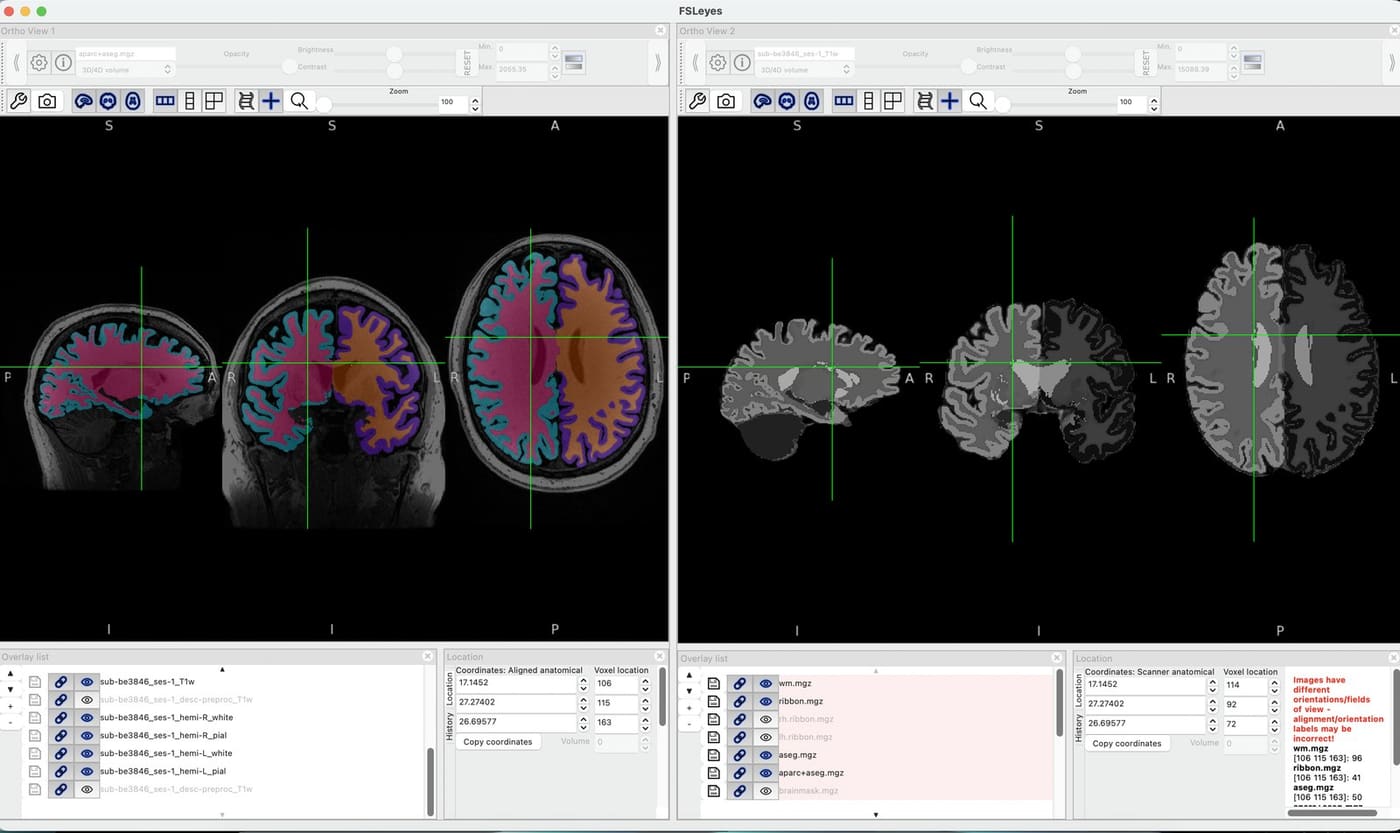
Two groups defined by self-regulatory struggle, people with binge eating disorder and people who smoke daily, come in for a brain scan, spend four weeks with a mobile intervention, and return for a second scan. The app, called Laddr, prompts them four times a day and delivers self-regulation training between sessions. The design stays close to real life. A Fitbit counts steps for the eating group, a daily breath test tracks carbon monoxide for the smokers, and the four-times-daily check-ins catch a craving in the moment it strikes. Both scans run the same five-task battery, described below.
How it builds on earlier work
Three strands of earlier research converge on this design, and each supplies something the others need. The first comes from Lisa Marsch and colleagues at Dartmouth, whose decades of work show that behavior-change treatment can be delivered by software with results that rival a human clinician. Their Therapeutic Education System became reSET, the first prescription app the FDA cleared to treat a disease (Campbell and colleagues, 2014). Laddr grows from that lineage and adds something more, because the same daily check-ins that carry the intervention also record self-regulation as it happens in the world.
Those daily records matter because the behaviors we care about leave traces. Momentary-assessment work shows that a binge tends to follow a rising tide of negative feeling and a fall in good mood, a pattern visible hours before the episode and reversed once it passes (Haedt-Matt and Keel, 2011). And where the brain does the resisting, its moves are well mapped. Coaching smokers to weigh the long-term cost of a cue over its immediate pull lowered their craving, quieted reward circuitry, and raised activity in prefrontal control regions, with the reward signal carrying the effect of prefrontal activity on craving (Kober and colleagues, 2010). The same prefrontal and striatal circuitry serves food and cigarettes alike, which is why one design can address two health-risk behaviors at once.
Set side by side, the three strands supply the three things a mediation study needs. Marsch’s platform delivers the intervention and measures the behavior it moves, the binge-eating work gives that behavior a real-world signature worth tracking, and the craving-regulation work names the neural pathway most likely to carry the change. This project’s work is to wire those pieces together, using engagement with Laddr as the dose, the daily record of craving and behavior as the outcome, and the brain’s control and reward systems as the route between them.
Five windows on control
No single task captures cognitive control, because control takes several forms, and the battery samples a few of them. One pair of tasks probes inhibition, the raw ability to stop an action already underway and to stop one action while letting another through. Another probes patience, asking a person to weigh a small reward now against a larger one later. The task closest to the clinic shows a person food or cigarettes and, with a simple cue, steers attention toward either the immediate pleasure of the stimulus or its long-term cost, and then has them rate how strong the craving feels. The gap between those two framings is the study’s read on craving regulation, and craving is the outcome the intervention is built to move. A final task simply plays a movie, catching the brain’s spontaneous reaction to tempting cues with no instruction at all.
The value lies in the spread. Each task leans on circuitry that work has already mapped, and each isolates a different facet of control, the power to cancel, to wait, to reframe, and to react. The field probes whether these are facets of a single underlying faculty.
If it’s working, where is it working?
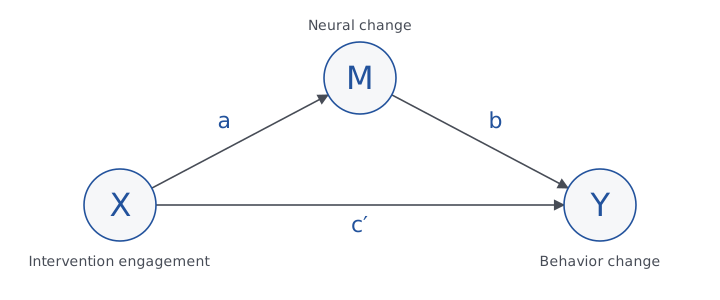
There is no control group in this study, so its causal claims are earned a different way. Every participant gets an engagement score, a dose, and the analysis asks whether more of the intervention buys more change, in behavior and in the brain. The heart of it is a mediation model. Intervention engagement, call it X, acts on craving and behavior, call it Y, through a change in neural activity, call it M. The goal is to identify neural activity that meaningfully carried any behavioral change.
The arithmetic of a pathway
A path model splits the effect of X on Y into two routes. The total effect, written c, is what engagement does to behavior overall. The direct effect, written c prime, is what remains once the brain measure is held fixed. The gap between them is the part of the change that traveled through the brain, and it equals the product of two smaller steps, the step from engagement to neural change, written a, and the step from neural change to behavior with engagement held constant, written b.
That product, a times b, is the quantity the whole study is built to estimate. Because the spread of a product comes out lopsided rather than bell-shaped, its significance is read from a bootstrap rather than a standard table.
The multilevel version treats each participant as a small study of one and then pools them, and it carries an extra term the simple version hides. The group’s mediated effect involves more than the product of the average steps. It also includes how those steps move together across people.
A region can count as a real pathway even when its average a and average b look ordinary, as long as the people with a strong engagement-to-brain step tend to be the same people with a strong brain-to-behavior step.
The same logic extends when more than one system might carry the change at once. The study weighs three of them together, and the indirect effect becomes a sum of three products, one for each pathway.
What counts as control
Ultimately, this study aims to contribute to the establishment of an ontology, a commitment about which categories within cognitive control are real. As an attempt at that, we run three candidate systems as parallel pathways, one each for regulation, inhibition, and valuation, in an effort to do the linking work between brain and behavior.
References & notes
- Eisenberg, Bissett, Marsch, Poldrack and colleagues (2019), Nature Communications — a data-driven map of self-regulation showing that lab tasks and surveys barely relate.
- Enkavi and colleagues (2019), PNAS — the reliability limits of common self-regulation tasks.
- Hudson and colleagues (2007), Biological Psychiatry — binge eating disorder as the most common eating disorder, defined by loss of control.
- Kober and colleagues (2010), PNAS — the prefrontal-striatal pathway behind cognitive regulation of craving.
- Haedt-Matt and Keel (2011), Psychological Bulletin — a meta-analysis of momentary mood around binge episodes.
- Campbell and colleagues (2014), American Journal of Psychiatry — the multisite trial behind reSET, from Lisa Marsch’s digital-therapeutics program at Dartmouth.
- Multilevel, voxelwise mediation follows the mediation effect parametric mapping approach of Wager and colleagues.
- Preregistration and analysis plan on the Open Science Framework. Manuscript in preparation. This feature is a plain-language companion to the study, written for a general reader.